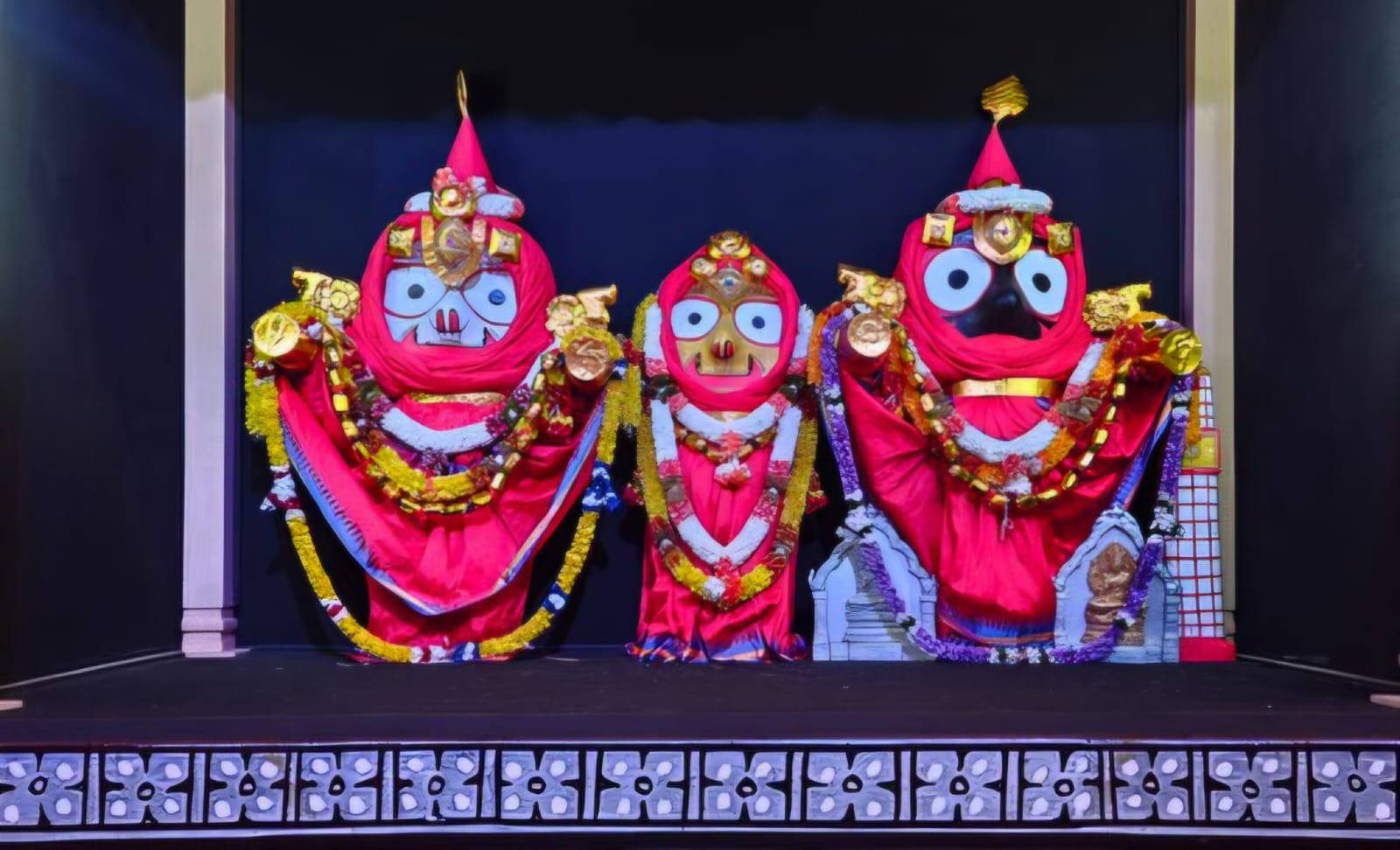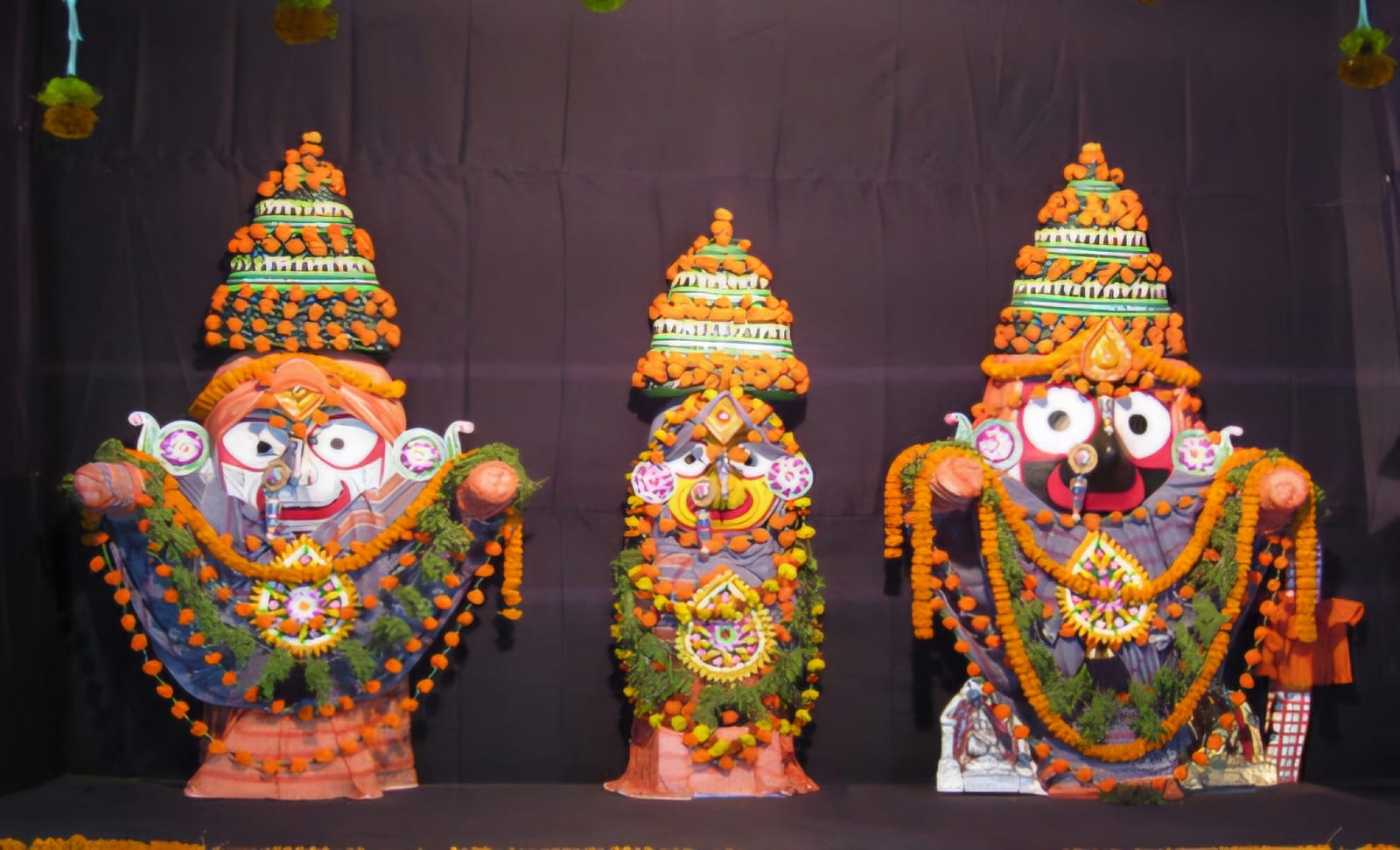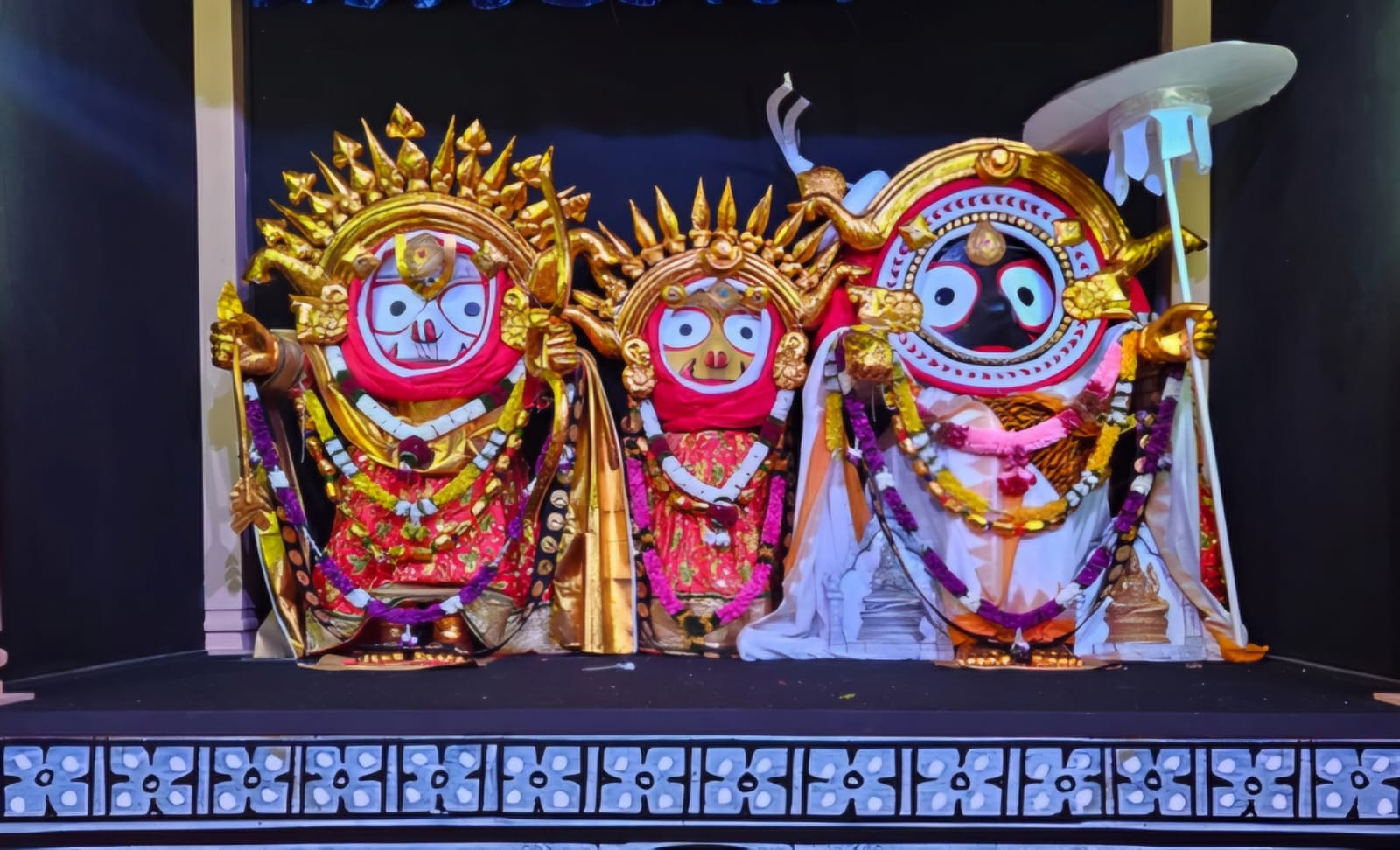
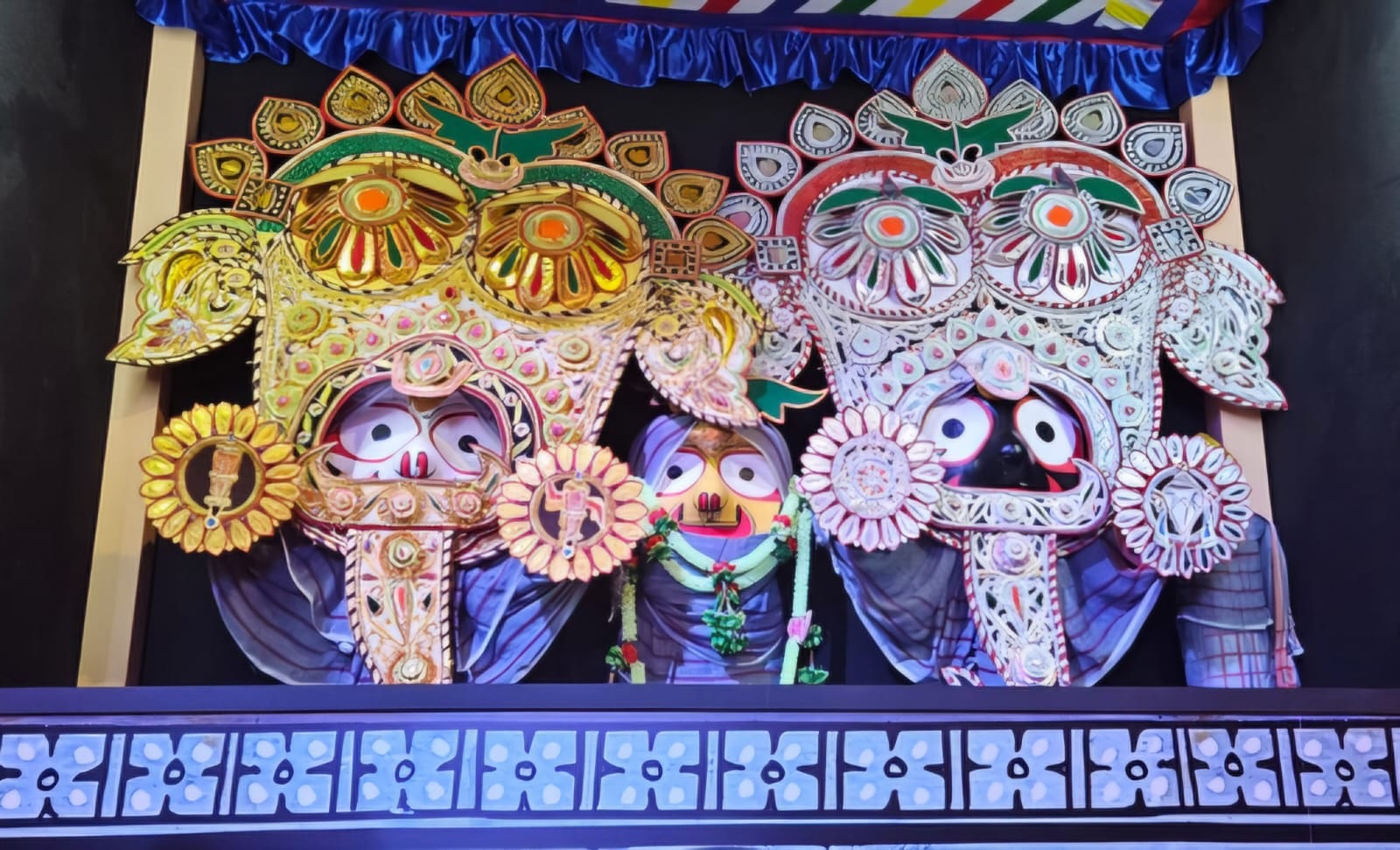
Hati Besha of Lord Jagannath is observed on the day of Snana Yatra, which falls on the full moon day of the month of Jyeshtha (Jyeshtha Purnima). After the ceremonial bathing ritual of the deities at the Jagannath Temple, Lord Jagannath and Lord Balabhadra are dressed in an elephant form (Gajanan Besha). This special attire is performed in the evening after the Snana ritual before the deities enter the Anasara period.
About Hati Besha :
The origin of this besha is connected with a devotee named Ganapati Bhatta, a great follower of Lord Ganesha from South India. When he visited Puri to have darshan of Lord Jagannath, he believed strongly that the supreme deity should appear in the form of Ganesha, whom he worshipped. Because of his deep devotion and faith, it is believed that Lord Jagannath accepted his devotion and appeared in the elephant form. To commemorate this event and the devotee’s faith, the temple servitors began dressing the deities in Hati (elephant) Besha after the Snana Yatra.
Since then, this tradition has continued every year. The Hati Besha symbolizes the unity of different forms of the divine, showing that Lord Jagannath embodies the essence of all gods, including Lord Ganesha. After this besha, the deities enter the Anasara period, when they remain away from public view for about fifteen days before the famous Rath Yatra festival.
Special Features of Hati (Gajanan) Besha :
Hati Besha represents that Lord Jagannath embodies all forms of gods, especially the form of Lord Ganesha.
Beginning of Anasara Period
After this besha, the deities become ill from the heavy bath and enter the Anasara period, when devotees cannot see them for about fifteen days.