
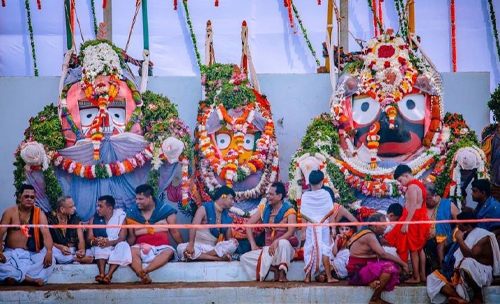
Snana Purnima – Sacred Bathing Festival
Snana Yatra (Snana Purnima) is one of the most important and visually grand rituals of
Jagannath Temple. It marks the first public appearance (Darshan) of the deities before the famous Rath Yatra.
Devotees Witness the divine bathing ceremony where Lord Jagannath, Balabhadra, and Subhadra are bathed with 108 pitchers of holy water.
When is Snana Yatra held?
- Celebrated on the full moon day (Purnima) of the Hindu month Jyeshtha
- Usually falls in May or June
- Occurs once every year
What happens during Snana Yatra?
1. Pahandi Bije (Procession)
- The deities:
- Lord Jagannath
- Lord Balabhadra
- Goddess Subhadra
- Are brought out from the sanctum in a grand procession called Pahandi
- They are placed on the Snana Mandap (bathing platform)
2. Sacred Bath (Snana)
- The deities are bathed with 108 pots of holy water
- Water is drawn from the sacred Suna Kua (Golden Well) inside the temple
- The bath is accompanied by:
- Vedic chants
- Traditional music
- Ritual ceremonies
This is why the festival is called “Snana Yatra” (Bathing Festival)
3. Hati Besha (Elephant Decoration)
- After the bath, the deities are dressed in a special attire called Hati Besha (Gajanana Besha)
- They look like Lord Ganesha (elephant form)
- This is a rare and unique darshan seen only on this day
Anasara Period (Post-Bath Illness)
- After the heavy bath, the deities are believed to fall sick (fever)
- They are taken to a secluded place called Anasara Ghara
- Temple remains closed for about 14–15 days
- During this time:
- No public darshan of the main deities
- Special herbal medicines are offered
Devotees instead worship:
- Alarnath Temple during this period
Connection with Rath Yatra
- After recovery from illness:
- Deities appear in Nava Yauvana Darshan (new youthful form)
- Then begins the grand
Rath Yatra